
Artificial Wetland
This project seeks to use the grey water outflow from the bathroom as well as rain water and turn it into a resource for a new ecosystem in the garden.
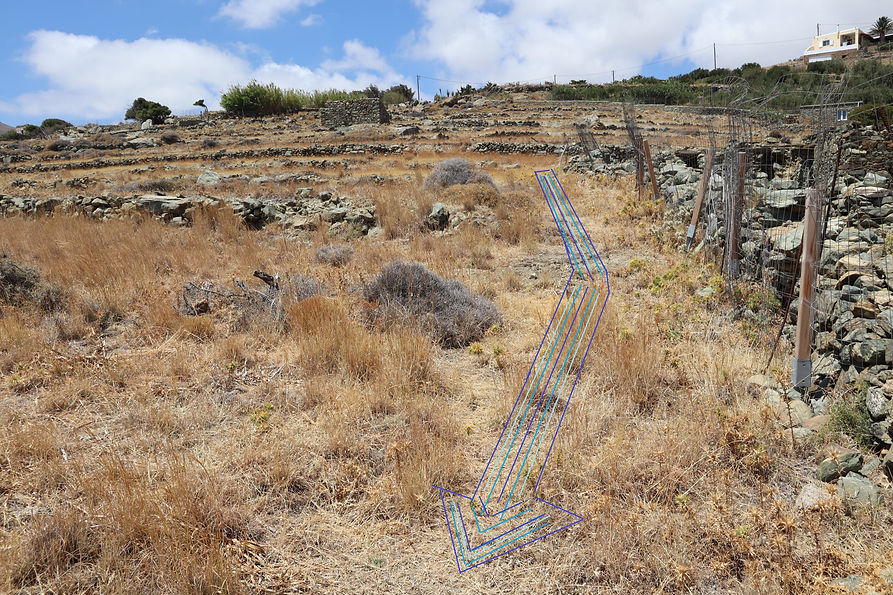
Arid land
In the summer the soil becomes baked and the land becomes dormant. Fungi is non-evident at this time of year, a feature necessary for old growth forest.
This is not to say that water does not fall nor exist in plentiful supply. Thousands of litres falls on the land and the house's roof. While much soaks into the soil, lots runs off, and little is available by the end of summer.


Grey water use
Visible in this photograph are the issues and solutions. The water outlet from the bathroom at the time of photography was draining into a small pit. There was no piping connecting the water runoff from the roof.
Meanwhile the site of the wetland is as dry as the rest of the garden, apart from the swampy little hole that is the "water pit".
All in all water is going to waste in the sense that although much water is landing on the garden, the land has little to show for it.

So Let's dig
I chose a 9 square meter circle with a depth of at least 1 meter in the central deep parts so as to be able to get the necessary amount of space. I was told it must be at least 8 square metres to work.
Excavated soil from the hole made the banks of the wetland.


Line the pond
I put down old cardboard on the bottom of the hole as well as a synthetic felt underlay. In some parts I also added some old tarp. I then used a thick pond liner and as I had some old PVC that I had as a car cover I put this on top of the liner. In some places it covered any gaps in the pond liner.
I bought PVC pipe to channel the bathroom outlet into the soon to be artificial wetland. This would later get cut as it is much too long.

Learning begins
I have read the Permaculture Guide to Reed Beds, and chosen not to follow all advice. Technically this is not going to be a reed bed after-all and furthermore the advice seemed sometimes like it might be hard to undo, such as adding the recommended amount of media. Not only that, at this time of the year I did not have the necessary amount of media. I did have some straw bales.
I added the straw bales and some reed clippings. These reed clippings would grow roots and shoots and later die.
This suggest that the water was good enough in quality but they needed a place to root.
A summer rain in August filled the wetland allowing for me to consider the project largely completed.


Now fix it
Obviously no one wants to see black pond liner in their garden so covering it with straw made sense. Besides I though this would mostly rot down and create plant media. I had it looking like this by October.
Still learning
One year later and getting these damned reeds to root is a nightmare. I add more media to the sides, on top of the liner and down into the water to create the swampy wet environment. I add a variety of seeds such as nitrogen fixers as well as acorns and bulbs around the wetland.
This is trial and error.


Planting
I also transplant some of the rooted reeds in the hope they continue to grow. At this point it is a little hard to keep track of all the plants.
September 2023
A full year later and the wetland is teaming with plants an animals that would never normally be in this patch of land. Snakes and leeches are among the least aesthetically desirable animals, while sparrows stop at the water to feed. Bees and wasps can be seen around and grasses grow on the thin but alive soil.
Sadly the reeds in this photo would still fail to fully root, but cutting reeds and throwing them into the water costs nothing. As I deposit more media, some plants will eventually take root and remain.
I will persevere.

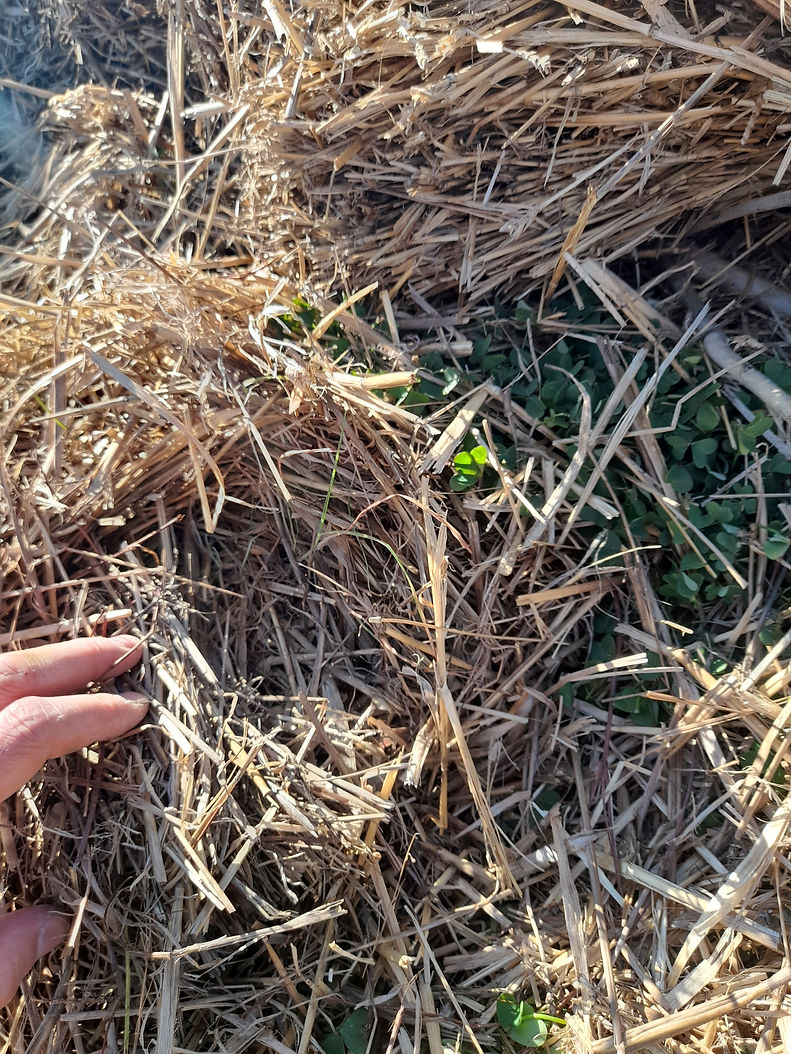

How did I do?
This project will never truly finish. It will be a learning progress even if I eventually do have a thick hedge of 6m high reeds growing here.
If the house becomes unoccupied in August the wetland does dry up, potentially undoing the good work achieved in the summer from human habitation. Although this could is permitted to be seen as beneficial as the subsiding waters leave living soil for grasses to propagate.
If I can only get reeds to root in the centre (I need more media) then I believe a duel could take place between these grass species.
Meanwhile I would like to experiment with an active carbon filter this could limit the toxicity that could potentially arise with the water flowing from the bathroom. It could be created simply with lined plant pots and a solar pump. In droughts it may need to be turned off.
Further additions could be upturned pots and stones, that with the help of a pump could provide shaded space/ caves for species of insect reptiles and even moss.